
 C#
C# Unity
Unity




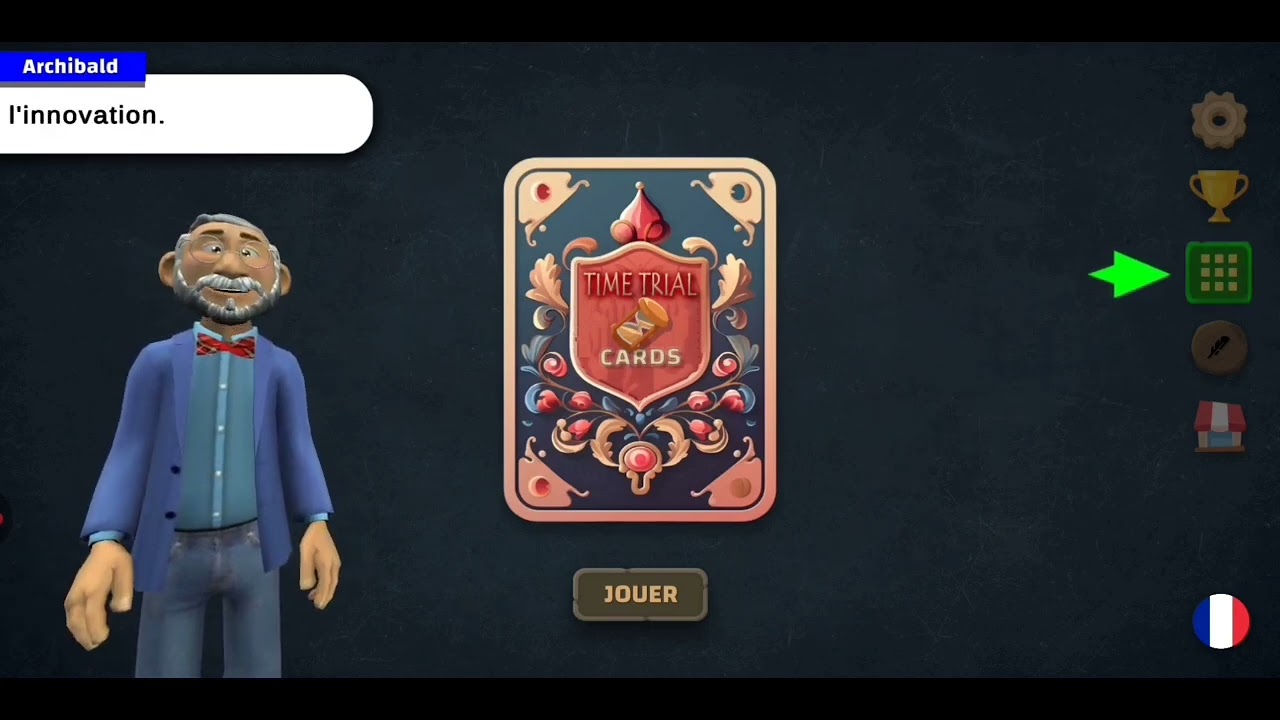
About the project
Time Trial Cards is an educational game that merges historical learning and competitive gameplay. The concept is simple: place each card representing an event, invention, or famous figure in the correct position on a timeline.
Game mechanics
The gameplay is based on a point system focused on speed and accuracy:
- Sort cards on a precise timeline
- Progress through the ages from Prehistory to the present day
- Accumulate points to unlock new levels and boosters
- Cover school curriculum from elementary to high school and beyond
Educational content
The game offers more than 500 cards classified according to several criteria:
- Historical categories: Art, Religions, Sports and Games, Politics and Social Events, Science and Innovations, Civilizations
- Specific historical periods
- Adapted school levels (elementary to high school)
- Languages: French and English
School+ Edition
A specialized version for teachers allowing to:
- Prepare customized game configurations
- Select periods and categories
- Choose game modes (Left/Right or Timeline)
- Adapt difficulty and game duration
- Manage boosters and language options
My freelance involvement
As a freelance Unity developer, I was commissioned to optimize and modernize the game’s technical architecture, with a focus on performance, maintainability, and code robustness.
Technical architecture modernization
Persistence system refactoring: Unification of save mechanisms to ensure user data consistency and eliminate desynchronization risks. Implementation of a modern system compatible with legacy saves.
Performance optimizations: Improved mobile game fluidity through elimination of expensive operations in render loops and strategic caching of critical references.
Code restructuring: Breaking down monolithic components into specialized modular services to improve maintainability and facilitate future evolutions, while preserving existing gameplay integrity.
Comprehensive technical audit
Before working on the code, I conducted an in-depth technical audit of the project to identify improvement areas and prioritize interventions.
Action plan and results
The audit enabled the establishment of a structured intervention plan in three phases:
- Critical stabilization: security and crash risk corrections
- Optimizations: performance and fluidity improvements
- Refactoring: architectural restructuring for future maintainability
This methodical approach ensured measurable interventions without regressions.